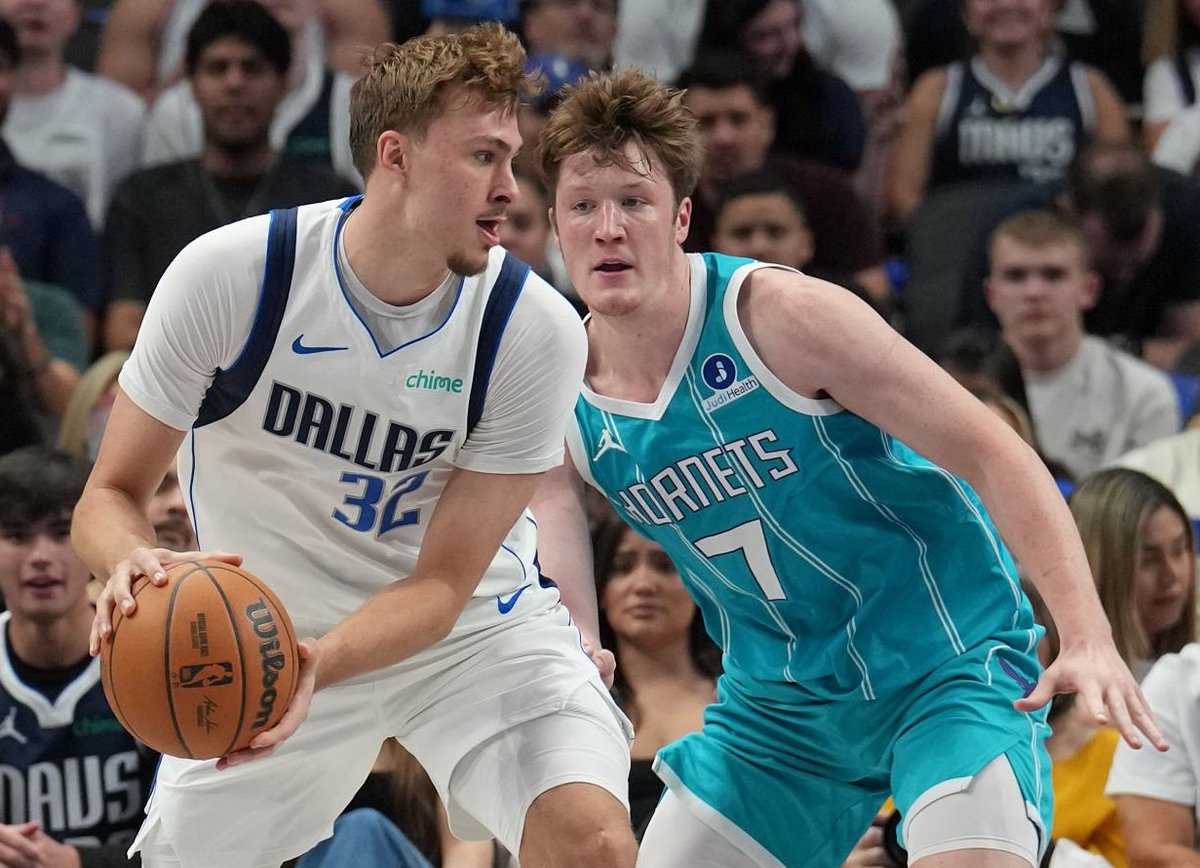

The Kia All-Rookie Teams are set to be announced but there are always questions about how the rookie awards capture which players have contributed to winning as a rookie and who is likely to contribute to winning basketball down the road.
Win Shares is a statistic that matters as it assigns who actually contributed to winning. It’s a cumulative stat, meaning as a players contributes throughout the season, the value continues to grow. It’s possible to have a negative win share, meaning your style of basketball actually hindered the team in terms of winning.
Win Shares per 48 minutes showcase efficiency and can be useful with enough minutes played.
- For the sake of our methodology, we don’t care about the NBA’s 65 game rule though we do care about a large enough sample size; Ties goes to efficiency.
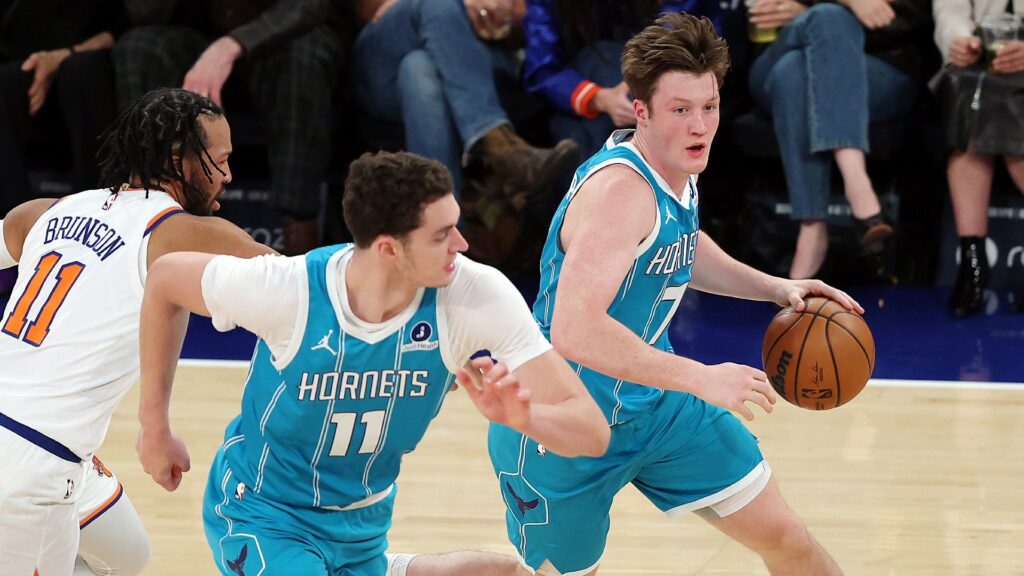
First Team WS All-Rookie Team
- Hornets G Kon Knueppel
- 8.0 WS (.151 WS/48)
- Spurs G Dylan Harper
- 4.2 WS (.130 WS/48)
- Sixers G VJ Edgecombe
- 4.4 WS (.081 WS/48)
- Mavericks F Cooper Flagg
- 3.8 WS (.078 WS/48)
- Hornets C Ryan Kalkbrenner
- 5.7 WS (.185 WS/48)
Knueppel was a clear star of the class in terms of win shares. Since the pandemic, only Chet Holgrem (8.9) had accumulated more win shares during his rookie season than Kon, though Chet’s was technically his second year in the league after sitting out the entirety of his first year.
The Sixers skijored VJ Edgecombe to an All-NBA rookie selection, playing him over 2600 minutes this season—a figure that hasn’t been hit by a rookie since the 2017/18 season when Ben Simmons (2732) and Donovan Mitchell (2638) each surpassed that total. While there are highlight worthy moments of Edgecombe’s career, the situational usage and minutes carrying him to an All-NBA rookie team award doesn’t necessarily indicate future stardom.
Kalkbrenner’s 5.7 win shares in 1479 minutes compares similarly to Mitchell Robinson‘s (6.1 in 1360 minutes) 2018-19 rookie season. He’s an old-school type center who should help teams get to the postseason and be a nice part of the rotation once there.
Flagg had an uneven season but his 3.8 win shares doesn’t raise a red flag historically, as it ranks 38th among the 135 player drafted in the top 5 since 2000. His 21 point per game as a record will be seen as a highlight but there are some efficiency issues to work out. As the Mavericks put talent around him more consistently, he’s likely to improve there.
Harper achieving 4.2 win shares in under 1558 minutes is pretty remarkable.
Second Team All-Rookie WS
- Heat G Kasparas Jakucionis
- 2.3 WS (.114 WS/48)
- Hornets G Sion James
- 3.1 WS (.080 WS/48)
- Raptors F Collin Murray-Boyles
- 4.0 WS (.154)
- Kings F/C Maxime Raynaud
- 3.6 WS (.088 WS/48)
- Hawks Derik Queen
- 2.7 WS (.063 WS/48)
Only three rookies since 2000 accumulated more win shares while playing under 1250 minutes than Murray-Boyles did this season. He only played in 57 games but if you include the seven from the first round of the playoffs, he’s shown enough he can be part of a winning team.
Like CMB, Jakucionis didn’t play in 65 games (only 53) and while he played slightly less than 1000 minutes, the results were encouraging.
James is the third member of the ultra productive Hornets rookie class. He’s one of 18 players this season who played in all 82 games.
Raynaud was a bright spot for an ugly Kings season. He’s unlikely to ever be a star but he could hold a bench spot in the league.
We wanted to give Queen’s frontcourt spot to Minnesota’s Joan Beringer, who we deem as a better in terms of impacting winning going forward but the french big man played in only 314 minutes (earning a spectacular .222 win shares per 48). Queen, who has a chance at stardom if he changes the way he plays, played in nearly 2000 so he gets the nod here even as we try to make this about projections going forward.
All stats are from sports reference